Showing posts with label Learn Music. Show all posts

Saturday, October 3, 2020

5 Things to do to Start Singing Right Now

Do you love to sing? Or do you have a song in your head that you dream of singing? Whether you wish to perform on a stage someday or you just want to step up your shower singing skills, anyone can learn how to sing better.


A common misconception about singing well is that you’re either born with it or you’re not. Well, we believe that ‘anyone can sing’ and we are going to tell you how!


In this blog, we will discuss 5 things you need to know to start your singing journey right now!


#1 A Singer is a Vocal Athlete

Singing is actually comparable to any athletic endeavour – let’s take for instance training for a performance, we can compare it to training for a marathon. There are certain muscles that need to be worked out and we push ourselves a little more every day to build up our endurance.


The same thing is applied when singing, we work out several parts of our vocal anatomy including vocal cords, larynx and soft palate. The more regularly you do this, the better control and flexibility you will have over your voice.


While physiological differences do play a role in the tone of the voice, the fact is that vocal training can make all the difference between an amateur singer and a professional.


#2 Stay Motivated

Now, when you are starting to sing, you will come across many nay-sayers. Everyone encounters negative people who constantly discourage you.


But, try to remember why you started in the first place. Who was that person or What was that song that made you want to sing?


Don’t forget it.


No singer was great when they started their musical journey, every one of them worked hard and didn’t give in to their critics and that’s why they got where they are.


Remember ‘you don’t have to be great to start but you have to start to be great.’


#3 Breathing Technique

One of the most important fundamentals to get right when you sing is your breathing technique. This is what makes the difference sounding breathless to holding that note with ease.


For singers, the technique of breathing through the diaphragm of belly breath is essential in order to deliver better and more stable sound.

If you don’t know how, try this technique. Put your hands (one on top of the other) on your belly, with the center of your lower hand touching your navel. Watch how your breathing responds. You may notice that your belly wants to expand as you inhale and retract as you exhale. Let this happen, but don’t try to force it.


The best way to practice this exercise is while lying in bed. Place your hands lightly on your stomach and watch as your belly expands and contracts with your breathing.


#4 Posture

When singing posture is one another important piece of the puzzle. So, let’s talk about how you can maintain the right posture while singing.


Whether you are standing or sitting, there is a way that you can ensure that your breathing and your singing resonance does not get disturbed.


Starting from the top, your chin should be parallel to the floor and slightly tucked in or back. hold your chest high and your shoulders down or slightly back. Keep your tummy both firm and expandable at the same time. You will need to practice controlling these muscles while learning how to breathe using your diaphragm.


Singing while standing is the best posture so that your tummy or lung area is not being crushed and you have enough room to move freely. Your hands should be relaxed and held still at your side. Do not hunch or lean backwards, stand straight.


Singing while sitting is not the ideal posture, however, if you need to sit, please ensure that your back is straight and not hunched forward or leaning backward. Your tummy and lung are should not be crushed.


#5 Easy Warm Up Exercises


Lip Rolls

Lip Rolls are a great way to warm up. They get blood flowing to the vocal chords, and around the mouth area increasing flexibility. Other variations of Lip Rolls are great exercise to ensure smooth transitions between Chest Voice, Head Voice and Mix Voice.


How to do a proper Lip Roll

  1. Gently place your fingers on each cheek

  2. Lift up and, depending on preference, move your fingers slightly forward or pull back

  3. Blow*


*Keep your lips loose! You want the air flow to allow them to vibrate against each other. Repeat this 4-5 times to ensure your lips mouth region gets warmed up and flexible.


Moving Up & Down the Keyboard

Starting from the middle C (or the 3rd C on the keyboard), move slowly towards the left or the lower pitch. Go as far as you can without straining too much or hurting your voice. Similarly, do this with the upper range. Do this a few times to wake up and warm up your voice so that it is nice and clear. You voice will also feel more flexible and in control.


So, there you have it. Our 5 pointers to begin your singing journey today! If you want to see a video demonstration of these topics, please see the video on our YouTube channel - https://youtu.be/t77WUmix7hw


If you want access to detailed guided lessons and practice routines, do check out our Western Vocals lessons on https://musicpandit.com -  On Music Pandit, you get access to step-by-step lessons that cover a whole lot of topics like improving your vocal range, vocal projection, improvisation, vocal vibrato and so much more.


We hope you enjoyed this topic and it was useful to you. So, please follow our blog so you don’t miss out on any upcoming blog posts. If there is any topic you want to know more about, just comment below and we will definitely discuss it.


Music Pandit brings you the best and the most effective way to learn music online with a complete 360-degree approach to learning music.


Music Pandit offers Online Video Lessons with the support of Personalised feedback from our Music Pandits, curated step-by-step lessons, extensive content - you can choose multiple instruments, carefully organised Practice Routines, a Musical Community, Creative Challenges, Goal setting and so much more – so you can learn Anytime, Anywhere at your pace! Sign up today on https://musicpandit.com 

Saturday, June 20, 2020

Online vs. Offline – What is the Right Way to Learn Music?

There are so many online music courses on the internet today but how do you know if they are any good? But then again, if you are going to a Music School in your city, you might not have the time to attend those music classes. So, what is the best option to learn music?


Online Music Education


Advantages 


  1. Flexibility: can pursue your music lessons at your own time and in your own pace, there aren't strict time constraints. So, you can adjust your time from your schedule and put your free time towards learning music.
  2. Organised Lessons: Because the lessons are pre-recorded, they are usually very crisp and clear, it does not change with teachers, accents or moods. The lessons are designed with a clear objective and everything essential to your learning is available in the lessons. All the theory and concepts surrounding the topic are all covered in the lesson.
  3. Practice Routines: You get structured practice routines to help you develop specific skills.
  4. Affordable: Online Music Learning is much more affordable compared to a Music School or private lessons.
  5. No Teacher Issues: Online lessons usually have good instructors who are also responsible to building the course and have vast knowledge when it comes to the topic. Instructors will be available anytime as the lessons are readily available and thus ensuring that you don’t have any challenges when it comes to your learning. Finally, the instructor’s mood and behaviour will be consistent and motivating throughout the course unlike in real life – thus ensuring you have a smooth learning experience.
  6. Multiple Subjects: You have many options when it comes to choosing an instrument in the online learning model. Websites can provide any number of courses that allow students to pick their favourite instruments or topics and learn.
  7. High Quality Video Lessons: the great thing about online music lessons, especially the pre-recorded classes is that the content is easy to view and understand. Unlike online LIVE sessions, there are no internet issues, lags or drop-offs.


Disadvantages


  1. No Instant Feedback: The drawback to online curriculum is the feedback system. There is a process involved for direct interaction through online and sometimes can be frustrating and time consuming. However, on platforms like Music Pandit, you will get personalised feedback in 24 hours.


Music school (Offline)


Advantages 


  1. Personal Interaction & Feedback: It allows direct interaction with your instructor. Every lesson can be immediately provided with feedback, so if you have any doubts or questions, it can be resolved right there.
  2. Network: You may meet fellow musicians who are at the same level as you. It is really healthy and fun to socialise with your peers as it encourages growth and more interest in that particular subject.
  3. Performance: You may perform as a part of the music school or with your peer group.


Disadvantages


  1. Less Subject Options: A Music school will only be able to provide a limited portfolio of subjects due to difficultly in getting specialised instruments and instructors.
  2. No Flexibility: If you are a working adult or learning in school or college, you might not get much time to go for music classes and the timings won’t be very flexible.
  3. Monotonous: It requires commitment as you may be rehearsed through the same drills again and again, especially if you are a beginner which, might make the sessions little monotonous.
  4. Instructor Issues: The teacher may not be very skilled and have limited knowledge. The teacher may be irregular due to other commitments like personal classes and shows. The teacher may not be in a good mood some days and can thus affect the learning of that day.


Conclusion

In conclusion, it is really useful to consider the benefits and dis-advantages before embarking on your music learning journey. It is good to ensure that your goals align with the method of teaching, affordability and the time required. 


Music Pandit brings you the best and the most effective way to learn music online with a complete 360-degree approach to learning music.

Music Pandit offers Online Video Lessons with the support of Personalised feedback from our Music Pandits, curated step-by-step lessons, extensive content - you can choose multiple instruments with One subscription, carefully organised Practice Routines, a Musical Community, Creative ChallengesGoal setting and so much more – so you can learn Anytime, Anywhere at your pace! Sign up today on https://musicpandit.com 

Sunday, May 24, 2020

5 Reasons You Should Learn to Play the Guitar

Guitar is an instrument that can be carried around easily and give you the perfect accompaniment while you sing away your favourite songs at a campfire, a friend's party or on a stage! Guitar is a really responsive instrument that can assist you to deliver your emotions in various ways and finally, it looks really cool! 

However, it also has some other great benefits - here are some reasons we think you should learn to play the guitar:

1. Accompaniment
There is no instrument, better than guitar, to company you - especially if you like singing and have to carry around an instrument to help showcase your talent. It is portable, lighter than most of the other instruments and the environment it can create compares to none. It can give you the sense of rhythm as well as assist you perfectly, if you want to sing along.

2. Building Personality
As you go further into learning the guitar and tackle each lessons, it makes you a better, smarter and a more well-rounded human being. The techniques and the concepts you have to learn to be able to play the guitar to your favourite tunes requires you to improvise and enhances your concentration, memory power, listening skills, analytical skills and your reactions. All of these nurture your body language and helps you to feel more confident about yourself. This helps build a personality that others and you yourself respect. Also, it also teaches you to manage your time better and more effectively as you start balancing your busy schedule along with getting better at the guitar.


3. Incorporating Fun in your life
With the ever growing fast paced living culture of today’s world, we often forget to leave some time for ourselves, to lay back, relax and have fun. Playing the Guitar can be the perfect getaway from the busy schedules that control our lives. Find some time, say 20-30 minutes every day to practice your Guitar, and you will see a vast difference in your mood as well as guitar skills. With the right instruction, you can be playing and singing your favourite songs in just a few weeks.

4. Learning Life Enhancing Skills
Playing the Guitar improves your coordination skills, cognitive abilities and also provides a workout for your brain as you read music and play the guitar, at the same time. It prepares you to be multitask, which you can apply in your day-to-day life. You can test and shape your creativity as you start learning to improvise on guitar. It can completely change the way you think, process and analyse certain aspects in your life, allowing you to ‘think outside the box’ and producing more effective results from you.

5. Medium of Expression
Guitar is an instrument that can talk for you, or for your emotions. It gives you an outlet to express your feelings or a mood you are trying to convey to the audience. This is what all musicians strive to get to as they mould their music into self-expression which appeals to the audiences’ emotion and form a connection. All instruments has their own capacity to be able to express, however a Guitarist can somehow talk through those emotions in a more subtle manner. If you are someone who has a lot to say but is unable to express it, the Guitar is the instrument that you are looking for.

All of these benefits come through stages in your experience in the instrument. If you are curious about the Guitar and want to check it out - you can easily learn with just 30-40 minutes a day. Nothing is hard, it is only unknown and you just need to familiarise yourself with it. You need to invest a little time to begin your guitar learning journey but you can be guaranteed a great skill and a fun lifelong companion.

Music Pandit brings you the best and the most effective way to learn music online with a complete 360-degree approach to learning music.


Music Pandit offers Online Video Lessons with the support of Personalised feedback from our Music Pandits, curated step-by-step lessons, extensive content - you can choose multiple instruments with One subscription, carefully organised Practice Routines, a Musical Community, Creative ChallengesGoal setting and so much more – so you can learn Anytime, Anywhere at your pace!

Saturday, May 9, 2020

4 Ways That Learning Music Make You Smarter

There are numerous substantiations about the role Music education can play mental and social development, as well as life lasting communication skills. In this article, let us look into the impact music education can have on brain development and stimulation.

1. Heightened Brain Development

When playing an instrument , it requires the attention of our brain which opens up several neural path in brain that helps in developing the brain. It undergoes various mental activity that keeps the brain active and drilled for complicated arrangements so that it can solve and react to  the things as quickly as possible. Somehow the architecture of the brain changes in a way that it starts perceiving tasks in a broader, smarter and emotional way. Thus, regularly practising music heightens the processing ability of our brain and it tends to decipher complex activities with ease and efficiency. Listening to music and playing music is considered the equivalent of a full-body workout for your brain!

2. Stronger Memory Power

Music education pushes you to understand certain capabilities of the brain, most importantly - the ability to memorise in innovative ways. It can teach you to analyse the task at hand and process the data in a way that helps you connect them with relation to its purpose. This way, when you can connect the dots, it helps you remember things better. It also enhances your spatial, auditory and visual capacity that helps you comprehend things much better.


3. Enhanced Cognition and Co-ordination ability

Playing an instrument requires concentration and conscious attention to details. It also requires a lot of coordination to be able to execute the playing accurately. So, with regular practice you can develop your coordinating abilities that will enhance your skills in the instrument, but also it will help you tackle other activities that you come across in your daily life that requires you to have some type of coordination. Practicing music is like a workout of your brain, so you are building muscles which will store more information as well as react more efficiently to the tasks given. Thus, it also improves your cognitive abilities which helps you retain things better, plan effectively and focus your attention to the necessary.

4. Faster ability to learn

As we have seen from the points discussed above, music really plays a vital role in the development and enhancement of our intelligence. It is safe to say that, if one has successfully done their music education, it can help them in long-term. They have a higher sense of conscience, consciousness, enhanced cognitive and spatial capacity and a broader sense of how things work. It prepares you for all the challenges that may come your way. You tend to learn about your surrounding faster and take the reasonable action necessary. It provides you the ability to learn things faster and use them to benefit your skills.

Music does not only make you smarter, it supports you emotionally as well. It can be one of the most supportive base that you can rely on. It also provides you with so many benefits that can improve your emotional life. Finally, the reason one should consider learning music is not just because of all the benefits stated above, but also for the simple joy you get by listening to music and playing music.

Sunday, April 26, 2020

5 Music Albums that Changed the Music Industry

Some bands became immortal because they put out a song that no one can resist singing, while some write music that no one might have expected. In this blog, we aim to cover 5 famous albums that changed the course of the Music Industry.

1. Radiohead’s “In Rainbows”
“In Rainbows” shook the music industry's very infrastructure. They simply announced on their official site, "the new album is finished, and it's coming out in 10 days." With that, Radiohead completely invented a new promotional method in the digital era. Ever since, In Rainbows arrived in everyone's inbox simultaneously and listeners experienced those torrid first notes of "15 Step" together, many artists have tried to "pull a Radiohead,". Beyoncé and U2 succeeded in delivering their music in a similar manner. The album's "pay-what-you-want" offer that allowed diehards, casual fans and curious listeners to put their own value on music, was just another step forward in questioning how the music business does business.

2. Run DMC’s Self-Titled Album
This was the first classic hip-hop album that anyone can remember. This was the breaking point where the buoyant post-disco rhythms and future-shocked electro were introduced which ended up dominating the genre's first five years on record. The Hollis, Queens crew did nothing short of reinventing the still-new style in their own image: hard, raw, in-your-face and catchy enough to challenge anything else in pop. The rap-rock fusion "Rock Box" stands as a foundationally transformative moment for American culture itself, while the earth-shaking one-two punch of "Sucker MCs" and "It's Like That"  presented grandstanding to complex social realism. The album is minimal and stark, but was revolutionary for its time.


3. Michael Jackson’s “Thriller”
It is hard to imagine the present-day musical landscape without “Thriller”, which changed the game both sonically and marketwise. The album's courageous blending of pop, rock and soul would completely change the scene in radio. They introduced an intense guitar solo, in what was considered pop at the time. A lot of elements from different genres added up to spice up the sound of the songs in the album. The album's fun, cinematic videos attracted even more audience and forced MTV to incorporate black artists into its playlists. Its promotional strategy, which led to seven of its nine tracks being released as singles, raised the bar for what, exactly, constituted a "hit-laden" LP. It broke records, showing just how far pop could reach: the biggest selling album of all time, the first album to win eight Grammys in a single night and the first album to stay in the Top 10 charts for a whole year! This was truly game changing.

4. Black Sabbath’s First Album
When Black Sabbath released their self-titled debut in 1970, they didn't think they were starting a movement. But their sludgy take on psychedelic-blues and incorporating catchy riffs in songs, it became the core of what's now known as metal — whether modified by "thrash," "progressive" or even "glam." Part of the influence lies in the way Tony Iommi's guitars were tuned down, the result of a freak accident that resulted in him shearing off two of his right hand's fingertips, and having to play with their tenderness in mind. That contributed to a doom-filled atmosphere that was only enhanced by frontman Ozzy Osbourne, who was still refining his "prince of darkness" persona, and song titles grasping toward signifiers of evil. The album proved inspirational to generations of musicians, who used Black Sabbath's ideas of rock & roll - making it faster, slowing it down even more, adding orchestral flourishes — to create not just a genre, but a musical movement.

5. The Beatles Sgt. Pepper’s Lonely Hearts Club Band
Sgt. Pepper's wasn't the first album to blend rock music with high art, but it was probably the first time that musicians of the Beatles' stature and popularity decided to turn their back on the style that had made them famous. It was the first time the Beatles were free of the responsibility of being the Beatles. The irony is that no other album cemented them so firmly in the public's mind. The Beatles as a whole defined an era inspiring many generations and song writing that still inspires the current crop of artists.

Music Pandit brings you the best and the most effective way to learn music with a complete 360-degree approach to learning music.

Music Pandit offers Personalised feedback from our Music Pandits, curated step-by-step lessons, extensive content - you can choose multiple instruments 🎤🥁🎶🎸🎹with one subscription, carefully organised Practice routines, a Musical Community, Creative ChallengesGoal setting and so much more – so you can learn Anytime, Anywhere at your pace!


Sunday, April 12, 2020

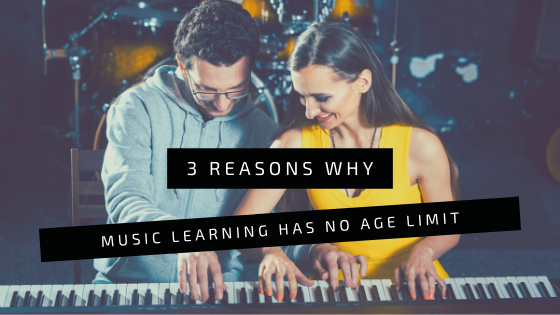
3 Reasons Why Music Learning has no age limit

Music is a universal language. Music has no boundaries. And, it can reach huge masses. Music has the ability to connect with you emotionally, spiritually as well as provide the best company when you need it.

Almost every person loves to listen to music, so if you wish to learn it, your age should definitely not stop you from learning or playing music. There is no age limit to learn music, all it requires is your time and patience and you will be playing tunes in no time.

Virtue of Patience
You might have heard the classic stereotypes where they say it is harder for older people to absorb things quicker. It is not entirely true. Modern day requirements put a lot of stress in an individual and it deprives them of valuable time that is required for themselves. Studies have proved that learning music is one really good way for both adults and kids to deal with stress and anxiety. Additionally, you are spending time learning something new! Learning music has benefits for all, age has nothing to do with it. While it can help develop a kid's cognitive ability and personality, it can act as a stress buster for adults.


If you are starting music learning as an adult, you do need to be little bit more patience. The reason is that it requires more time compared to the youth, who are already used to learning things every day, from their daily co-curricular activity. However, as long as you want to learn, there is nothing stopping you. So, set aside some time today and check out https://musicpandit.com/


Universal Language
Music can be understood by all. It is perceived and felt by all from different ages. If you wish to play along your favourite music or create your own, it is never too late in music. All you have to do is find time for practice from your schedule, follow the exercise and lessons and learn the practicality of it. Just a little commitment from your side and your dream to play a musical instrument will be fulfilled.. Music is a gift that anyone who wishes to learn should find time and make use of it to their benefit, may it be for fun, remedy for stress or developing important personality traits.

Simple Needs
To start your learning, all you need is an instrument at home and assigned time for practice. Those are the ingredients for learning, your age has absolutely nothing to do with it perhaps only your daily schedule can decide if you can give your time. It is an amazing outlet for those who wants to free themselves from the stressful monotony of their everyday life. Everyone has a different pace and system in learning something, but we assure you it’s not about the age, it is all about your willingness to learn and to make it second nature for your muscles to be able to play those by sheer commitment to practice and effective repetition.

So, don’t let a simple thing like your ‘age’ be a factor in determining what you can or cannot do. Music is for everyone. Music learning is for everyone. Playing Music is for everyone. Use music to de-stress, express yourself and fulfil yourself. Live your best life.


Music Pandit brings you the best and the most effective way to learn music with a complete 360-degree approach to learning music.

Music Pandit offers Personalised feedback from our Music Pandits, curated step-by-step lessons, extensive content - you can choose multiple instruments with one subscription, carefully organised Practice routines, a Musical Community, Creative ChallengesGoal setting and so much more – so you can learn Anytime, Anywhere at your pace!


References

Saturday, April 4, 2020

4 Reasons Why Listening to Music is Crucial to becoming a Better Musician

If you have never seen a game of cricket, chances are you are probably average at playing it too. The simple reason is that you won't understand the context of the game. 


Playing an instrument is the same. You may have the knowledge but if you don't listen to songs/music, how are you ever going to be able to apply them? To be able to test your skills you need to have an idea, a reference to evaluate what you have learnt. Music is something everyone enjoys, so there is no need to force anyone to listen to music. In this blog, we talk about how listening to music is absolutely essential it is for you to grow as a musician.

1. Context

Every technique that you learn, every theoretical lessons has a role to play. Songs help you demystify them. You can hear techniques being applied, scales being followed which, only strengthens your understanding of it. It is amazing to be original but even originality needs an inspiration and a reference to create. Listen to your favourite artists, try to imitate them and it will inspire you to be better.

2. Aural (Listening) Skills

You may have hear it being emphasised time and again that aural or listening skills are really crucial for a musician. Good aural skills makes you a more complete musician. Songs help you develop essential skills, a sense of rhythm and familiarise you with different dynamics of sound. These include melody constructions which, are very important to create good music. You start to understand the differences in notes and apply them by just listening to a tune.


3. Learning Different Musical Styles/Genres

There are so many different styles/genres of music and every one of them is unique. To learn to apply your skills so that you sound unique each time – it helps to explore different types of music. For instance, you would play a funk rhythm in a rock song! So discover new sounds and learn to use your skills differently to unlock skills to new genres of music.

4. Inspire Yourself

Songs that excite you inspire you. They inspire you to practice more, sharpen your skills and pushes you to dedicate more time to your instrument. Follow your idols, their moves, their techniques and integrate them into your playing style. It just pushes you to dedicate more time and effort to developing your skills which, will fast track your progress to becoming a better musician.

Finally, listening to a range of different types of music is a vital part of your music learning journey as it connects your playing skill to your knowledge of techniques and concepts. It shows you the application of the techniques you learn and encourages you to experiment more practically with your instrument. Thus, the more you listen, the better your grasp will be on how to approach a song or a certain technique that you have been learning on the instrument. So don’t just play your instrument, find time to listen to plenty of music and get inspired!

Music Pandit brings you the best and the most effective way to learn music with a complete 360-degree approach to learning music.

Music Pandit offers Personalised feedback from our Music Pandits, curated step-by-step lessons, extensive content - you can choose multiple instruments with one subscription, carefully organised Practice routines, a Musical Community, Creative ChallengesGoal setting and so much more – so you can learn Anytime, Anywhere at your pace!

Wednesday, February 12, 2020

How To Choose Your First Instrument

Are you the few ones who are eager to learn a music instrument but torn between which instrument to pick up? You want to emulate your idol and play like them? Or You want to compose your own music but not sure about which instrument will help you realising your dream? Here is a little information about the kind of instruments and a helping hand to guide you decide upon an instrument so that you can finally start your Music Journey.

Your Interest

First of all, what interests you? What are the kind of songs that you love to listen and would love to play yourself? Which instrument excites you the most? This can help you decide which instrument would best suit you.  Piano/Keyboard is very versatile and can help you compose without any limitations, whereas Guitar is the most compatible instrument you can learn. Drum would take some space but if you are a fan of hard hitting, letting your groove out on a beat, that’s the instrument for you. There are certainly many other instruments, but let’s talk about the common and popular ones. It completely depends on what you are looking for through music. You could learn vocals if you want to sing your heart out and touch a few.

Preference of Music Genres

If you are into Rock and Roll, Guitar might be the most popular choice but if you want to create rocking beats, you might as well go for Drums. Or, You are in to Pop, or electronic music, then Piano or Keyboard is the smartest choice for you. Every genre of music is dominated by an instrument or two, so do the research on your favourite songs and artists, learn about the process of making and you might discover love for a particular instrument. Which part of your favourite song would you like to imitate or learn? That will let you know what you really want to learn and play.


Practice Time Limitations

Before you begin to learn an instrument, map out your schedule. See, how you would manage the time for your regular activities and learning an instrument. Observe how much time you can give to learning an instrument, what kind of space you have for practice? If you are learning drums, make sure you have the space to occupy your drums and insulate your room so that neighbours aren’t disturbed. Also, if you are eager to learn vocals, you have to practice in a room where you can sing open heartedly with an open loud voice. There are many cheap ways to soundproof your room, you can do the research on that as well. At the beginning level, learning guitar may take some time, so make sure you have the time to regularly practice guitar. Keyboard/Piano are relatively easy in the beginning, however as you advance through higher levels, you will have to give time for any instrument to master the skills that is required to play the instrument to its fullest capability.

Budget

Different instrument would cost you differently. Although this shouldn’t be the factor that stops you from playing what you would love to learn, we will still discuss about how different instrument cost. The cheapest would be learning vocals as it doesn’t require any instruments in the beginning, as you begin to perform regularly, you might want to buy a microphone that would help you understand the dynamics of singing on a mic. Guitars can be very affordable, especially in the recent times with big brands producing low budget guitars with very decent quality, and it can serve you for a long time as well. Pianos are costly, however keyboards can be found in affordable prices but to get a good quality, long lasting instrument, you might have to cash in a little bit, but for composers, this is kind of a must have. The costliest of all the instruments can be the drums. Although you get affordable drum sets but if you are looking to invest on something that will last longer, it is an expensive instrument to buy. As it involves a lot of different parts as well, the price would depend on what are you buying in the drum set. As we discussed, Budget should not be a factor in deciding what instrument you want to learn, as the investment you are making will serve you for far more benefits than loss if you are really interested in learning and playing the instrument. One thing is for sure, if you have the desire to learn, you will not regret doing the investment on the instrument you would love to learn.  


Music Pandit brings you the best and the most effective way to learn music with a complete 360-degree approach to learning music.

Music Pandit offers Personalised feedback from our Music Pandits, curated step-by-step lessons, extensive content - you can choose multiple instruments with one subscription, carefully organised Practice routines, a Musical Community, Creative Challenges, Goal setting and so much more – so you can learn Anytime, Anywhere at your pace!

5 Tips to Choose the Right Song for Your Voice

What is the right song to sing to showcase your musical talent to an audience? This is a question you must consider as a performer especiall...